

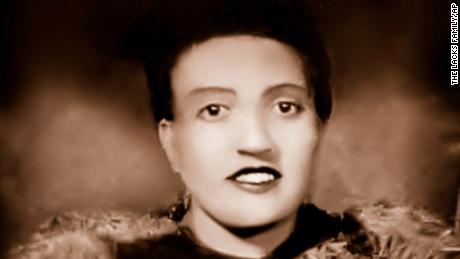
Lacks, a Black woman, was suffering from cervical cancer when she was being treated at the Johns Hopkins Hospital in 1951. A surgeon removed cells from her cervix without her consent during a procedure and that sample enabled a doctor at the hospital to create the first human cell line to reproduce outside the body.
The cell line, now known as HeLa cells, allowed scientists to experiment and create life-saving medicine including the polio vaccine, in-vitro fertilization and gene mapping as well as helped advance cancer and AIDS research.
“In honouring Henrietta Lacks, WHO acknowledges the importance of reckoning with past scientific injustices, and advancing racial equity in health and science,” Director-General Dr. Tedros Adhanom Ghebreyesus said in a statement. “It’s also an opportunity to recognize women — particularly women of colour — who have made incredible but often unseen contributions to medical science.”
Several of Lacks’ grandchildren, great-grandchildren and other family attended the award ceremony at the WHO office in Geneva. Her 87-year-old son, Lawrence Lacks, Sr., accepted the award on her behalf.
“We are moved to receive this historic recognition of my mother, Henrietta Lacks — honouring who she was as a remarkable woman and the lasting impact of her HeLa cells. My mother’s contributions, once hidden, are now being rightfully honored for their global impact,” Lawrence Lacks said in a statement.
“My mother was a pioneer in life, giving back to her community, helping others live a better life and caring for others,” he added. “In death she continues to help the world. Her legacy lives on in us and we thank you for saying her name — Henrietta Lacks.”
Family sues biotechnical company for nonconsensual use of her cells
At the time of Lacks’ procedure, taking cells from people without their consent wasn’t…
Source : cnn


