

The Connecticut is now pierside at a US Navy base on the Pacific island of Guam. The Navy says it got there — more than 1,800 miles (2,900 kilometers) east of the South China Sea — under its own power and its nuclear reactor was not harmed, although 11 of its crew of suffered minor injuries in the collision.
The Pentagon has not released details of the damage the vessel incurred nor how long it might be out of action in a region which, with the rise of the Chinese navy, is seeing growing demands on the US fleet.
Which leaves US military planners with some big questions to answer in the coming weeks and months.
Not the least of which is, how did this happen?
Driving a submarine
The Navy on Thursday gave a hint of what might have led to the accident when it relieved the Connecticut’s leadership of their command due to loss of confidence.
The commanding officer, Cmdr. Cameron Aljilani, was relieved of duty, as were the executive officer, Lt. Cmdr. Patrick Cashin, and the chief of the boat, Master Chief Sonar Technician Cory Rodgers.
Vice Adm. Karl Thomas, commander of US 7th Fleet, determined that “sound judgment, prudent decision-making and adherence to required procedures in navigation planning, watch team execution and risk management could have prevented the incident,” according to a statement about the decision.
The undersea environment is unforgiving and even small mistakes can have huge consequences.
“Submarining is hard, it’s really hard. Not everything goes right all the time,” said Thomas Shugart, who spent more than 11 years on US submarines, including commanding an attack sub.
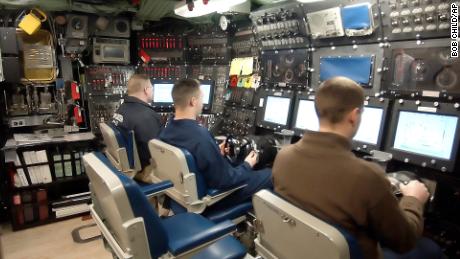
Surface ships or a sub operating at periscope depth can relay on global positioning satellites to give sailors a very accurate location, said Shugart, now an adjunct senior fellow at the Center for a New American Security.
But at depth, the GPS systems are not available. Submariners use their compasses and charts.
Accurate charts (with a resolution of 328 feet or 100 meters) of the sea…
Source : cnn


