

For more than a year, we have been tracking the flow of sanctioned items out of the UK and towards Russia.
Electronic equipment, radar parts, components used to make aircraft and drones. These are all items that have been banned from going to Russia. For good reason: while Britain is far from a global manufacturing powerhouse, it nonetheless still makes certain prized components used to make machinery.
In some hands, these components could be used for peaceful purposes, but they could also be used to wage war. All of which is why they are among the items sanctioned by G7 nations and banned from entry to Russia.
A glance at the trade figures might lull you into thinking those sanctions have been extraordinarily successful. Look at the flows of these so-called “dual use” goods from the UK to Russia and they drop to zero shortly after the invasion of Ukraine and the imposition of those export bans. But that’s not the whole story – because over precisely the same period, exports of those same items to countries neighbouring Russia have risen sharply.
At this point, the data trail goes cold. As far as the statistics tell us, those components stay in the Caucasus and Central Asia. But there are two powerful pieces of evidence that suggest otherwise. The first is that we have travelled out to the border of Russia and filmed European-sanctioned goods (in this case cars, the hardest of all goods to disguise) passing across the border.
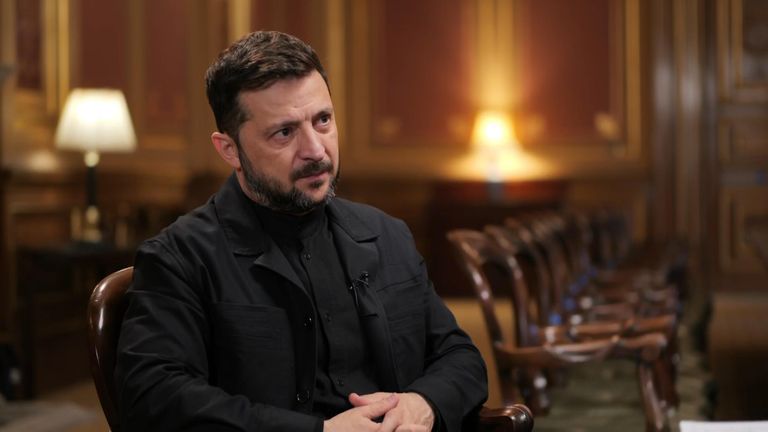
Zelenskyy: Sanctions needed as countries supplying missile components to Russia
The second is that Ukrainian forces have repeatedly found weaponry and equipment containing European and…


