

[ad_1]
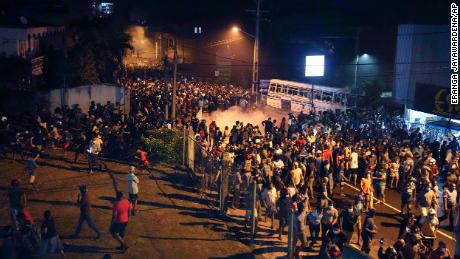
Driving the discontent is the worst economic downturn since the South Asian country gained independence in 1948, with crippling inflation sending the cost of basic goods skyrocketing.
Here’s what you need to know.
Experts say the crisis has been years in the making, driven by a little bad luck and a lot of government mismanagement.
Over the past decade, the Sri Lankan government has borrowed vast sums of money from foreign lenders to fund public services, said Murtaza Jafferjee, chair of Colombo-based think tank Advocata Institute.
This borrowing spree has coincided with a series of hammer blows to the Sri Lankan economy, from both natural disasters — such as heavy monsoons — to man-made catastrophes, including a government ban on chemical fertilizers that decimated farmers’ harvests.
Facing a massive deficit, President Gotabaya Rajapaksa slashed taxes in a doomed attempt to stimulate the economy.
But the move backfired, instead hitting government revenue. That prompted rating agencies to downgrade Sri Lanka to near default levels, meaning the country lost access to overseas markets.
Sri Lanka then had to fall back on its foreign exchange reserves to pay off government debt, shrinking its reserves from $6.9 billion in 2018 to $2.2 billion this year. This impacted imports of fuel and other essentials, which sent prices soaring.
Topping all that, the government in March floated the Sri Lankan rupee — meaning its price was determined based on the demand and supply of foreign exchange markets.
That move appeared aimed at devaluing the currency to qualify for a loan from the International Monetary Fund (IMF) and encourage remittances.
However, the plunging of the rupee…
[ad_2]
Source : cnn


