

In a small town in Suffolk, a team of police officers walk into a Turkish barbershop.
It’s clean and brightly painted, the local football team’s shirt displayed on one wall. Two young men, awaiting customers, hair and beards immaculate, tell officers they commute to work here from London.
Step through the door at the back of the shop and things look very different.
In a dingy stairwell, a bed has been crammed on to a landing, and a sofa just big enough to sleep on is squeezed under the stairs. The floor and steps are covered with empty pizza boxes, food containers and drink bottles. There’s a pair of socks on the floor and a T-shirt on the bed. An unopened prescription sits on a table.
At least one person is clearly living here, but possibly not by choice.
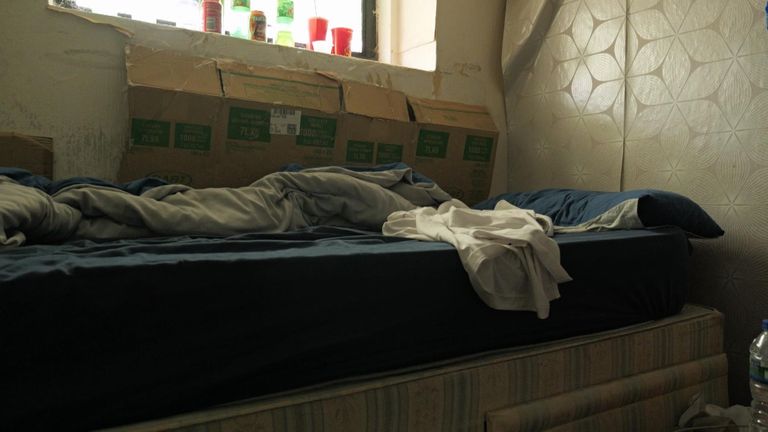
“This could be linked to exploitation, this could be linked to some forms of modern slavery,” says John French, the modern slavery vulnerability advisor for Suffolk Constabulary.
“You have to ask yourself when you come across this sort of situation, why would someone want to live in these sorts of conditions?”
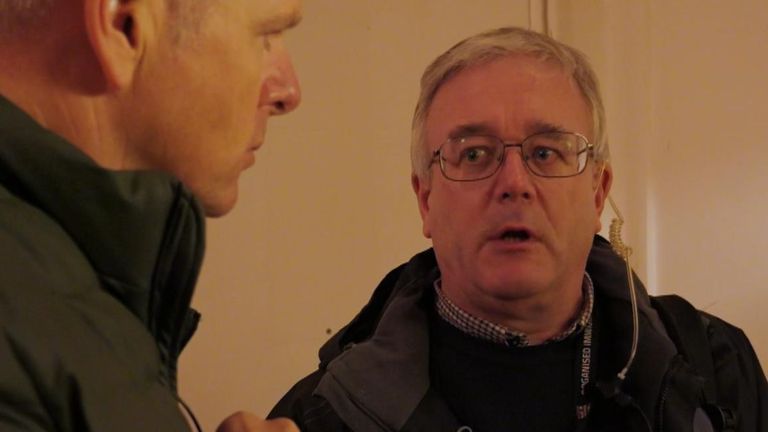
John French speaks to Paul Kelso
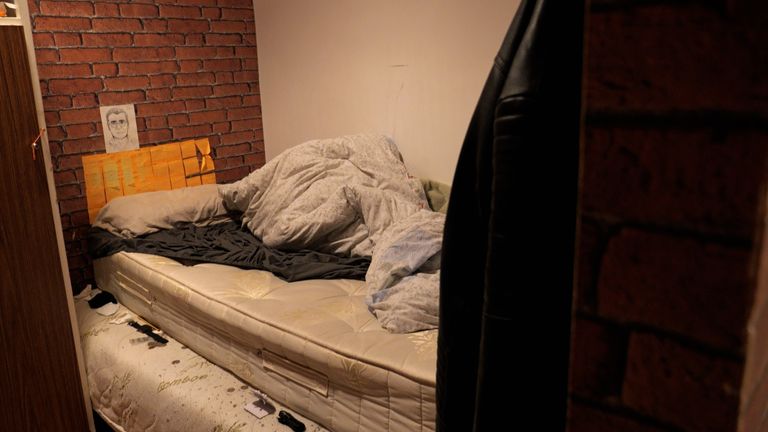
Behind a second door, this one padlocked, is a second room. This one cleaner, but clearly not safe.
Phrases in Turkish and English have been scribbled on post-it notes stuck to the wall and officers find a driving licence with a local address.
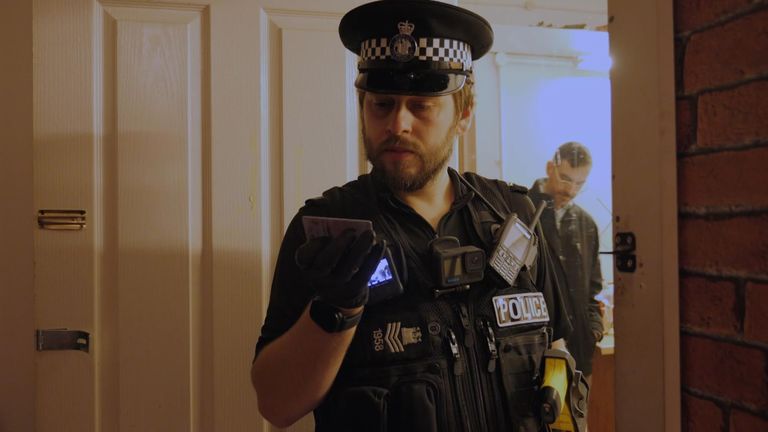
“Judging by the state of the room, this could be an ‘Alpha’ living in here,” says Mr French.
“An ‘Alpha’ is someone who’s previously been exploited,” he explains. “They have been given a little bit of trust and act like a kind of supervisor. They are very important to us, because we want to get them away from others before they can influence them.”
A brand-new Audi SUV is parked at the back.
What’s going on here?
We are in…


