

[ad_1]
Women face a significant loss of grey matter in the brain after menopause, which may explain why they are more likely to suffer dementia than men, a new study suggests.
Researchers looked at 124,780 women to examine the effects of menopause on the brain and whether hormone replacement therapy (HRT) can prevent cognitive decline.
Among post-menopausal women, they found significant reductions in grey brain matter, which is vital for mental functions, memory, emotions, and movement.
Correspondingly, the worst-affected parts of the brain were the ones governing these functions – the hippocampus, the entorhinal cortex, and the anterior cingulate cortex.
Study co-author, Barbara Sahakian of the University of Cambridge, said: “The brain regions where we saw these differences are ones that tend to be affected by Alzheimer’s disease.
“Menopause could make these women vulnerable further down the line. While not the whole story, it may help explain why we see almost twice as many cases of dementia in women than in men.”
Women account for around two-thirds of people living with Alzheimer’s disease in the UK, according to Michelle Dyson, chief executive of the Alzheimer’s Society.
“And while we still don’t fully understand why they are more susceptible than men, it is thought that hormones may play a role,” she said.
“This large study adds to evidence showing how menopause impacts the brain, including physical changes such as loss of brain volume.
“But without long-term participant tracking, to check if they later develop dementia, we cannot be sure that these brain changes associated with menopause also increase dementia risk.”
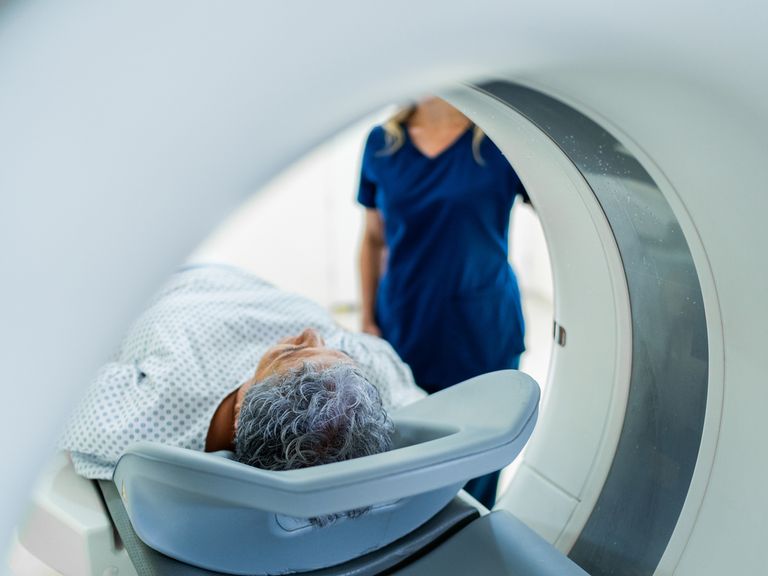
File pic: iStock
The impact of the menopause on cognition – including thinking, attention, language,…
[ad_2]


