

Kellogg’s cornflakes, Bonne Maman jam, Kent Crisps, Brewdog beer… these are the items on the supermarket shelves in front of me.
I’m in a branch of Azbuka Vkusa (or ‘Alphabet or Taste’) in Moscow, where the aisles look remarkably like those in a Tesco, Sainsbury’s or Waitrose.
Russia is the most sanctioned economy in the world, but here we are, more than three years into its supposed isolation, and the shelves are still stocked with Western goods.
So how come?
Many of the products on sale here are what are called ‘parallel imports’. That means they’ve entered Russia via third countries, without the trademark owner’s permission.
Russia legalised the practice soon after its invasion of Ukraine to sidestep sanctions and to shield consumers from the impact of a mass exodus of foreign brands.
So despite companies pulling out of Russia, their products can often still be found here.
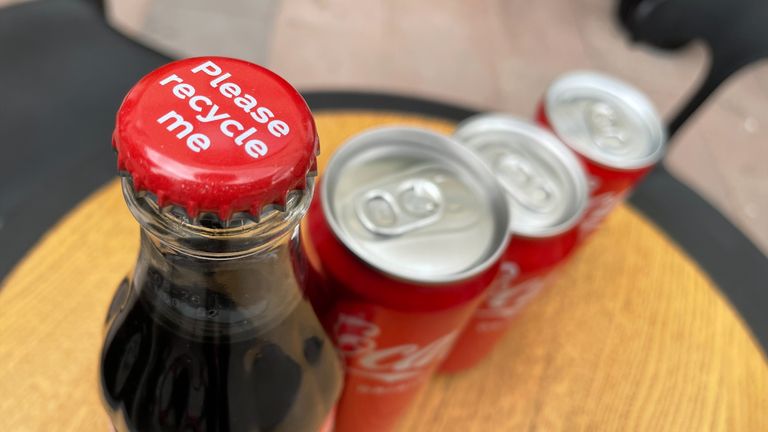
Take Coca-Cola for example. It stopped selling to Russia and ceased operations here in 2022, but there’s no problem buying its drinks.
Next to each other on the supermarket shelf, I found one can from France, one from Poland, one from Iraq and even a bottle from the UK. “Please recycle me,” the cap hopefully implores.
Like other businesses that say they have not authorised imports of their brands into Russia, there’s little Coca-Cola can do about it. The company declined a request to comment.
This specifically isn’t sanctions-busting, since food and drink are generally exempt from the restrictions imposed by Britain and the EU. It is, however, an example of how trade bans (self-imposed, in this case) can be circumvented. And the very same practice is being used on some sanctioned goods, like luxury cars.
At Frank Auto, a glitzy car showroom in northwest Moscow, there’s a Porsche Cayenne Coupe, a Mercedes EQE and a BMW X5. All are under two years old, i.e. younger than the sanctions regime that was designed to keep…


