

[ad_1]
But in the eyes of the Chinese Communist Party, it is not censoring enough — and needs to pay a price, literally.
That’s far from the first time Weibo has been slapped with such a hefty fine by the government. Over the first 11 months of this year, the social media giant was fined 44 times for transgressions that cost it a total of $2.2 million, according to the Cyberspace Administration of China (CAC), a government agency under the control of the party.
Weibo said in a statement it “sincerely accepts criticism” from the regulator and has established a working group in response to the penalty.
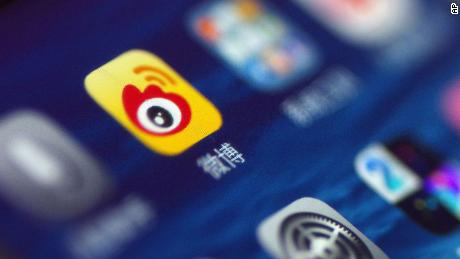
The latest punishment on Weibo came just two weeks after Douban, a popular site for reviewing movies, books and music, was fined $236,000 on similar grounds — adding to the $1.4 million in fines it has accrued this year to November for apparent content violations.
Chinese internet companies have long been subject to government crackdowns, with their executives frequently summoned by the CAC for “criticism and rectification.” But it is rare for government regulators to openly admonish platforms for doing a botch job on censorship, analysts say.
“The first step in censorship is you can’t talk about the censorship. You’re not allowed to disclose it unless told to [by the government],” said Eric Liu, an analyst at China Digital Times, a US-based news website tracking censorship in China.
In announcing the penalties against Weibo and Douban, Liu said the Communist Party is “bringing the matter to the surface” on purpose — signaling that such harsh punishment could become a regular occurrence.
In addition to government censors, Chinese internet firms also hire dedicated moderators to police their own platforms, removing content deemed illegal or harmful by the party — which ranges from pornography, violence and fraud to criticism of the government and other information the party considers “politically sensitive” or “morally degenerate,” such as LGBTQ content.
Liu, the analyst,…
[ad_2]
Source : cnn


