

Conservation experts are urging homeowners not to mow their lawns over the coming months to help boost butterfly numbers, with more than half of UK species now in long-term decline.
Last year was one of the worst on record for butterflies, with 51 of the UK’s 59 butterfly species showing a decline in numbers compared with figures for 2023.
The fall is being driven by human activity, the use of pesticides and climate change, experts have said.
The UK Butterfly Monitoring Scheme, run by a coalition of conservation organisations, said renowned butterfly species including the small tortoiseshell, the chalk hill blue and small copper suffered their worst year ever.
It was also the second-worst year, since monitoring started in 1976, for popular butterflies living in gardens, parks and the countryside such as the common blue, gatekeeper and large whites.
Richard Fox, from Butterfly Conservation, said: “I am devastated by the decline of our beloved British butterflies, and I’m sorry to say it has been brought about by human actions.
“We have destroyed wildlife habitats, polluted the environment, used pesticides on an industrial scale and we are changing the climate.
“That means that when we have poor weather, these already-depleted butterfly populations are highly vulnerable and can’t bounce back like they once did – and with climate change, that unusual weather is becoming more and more usual.”
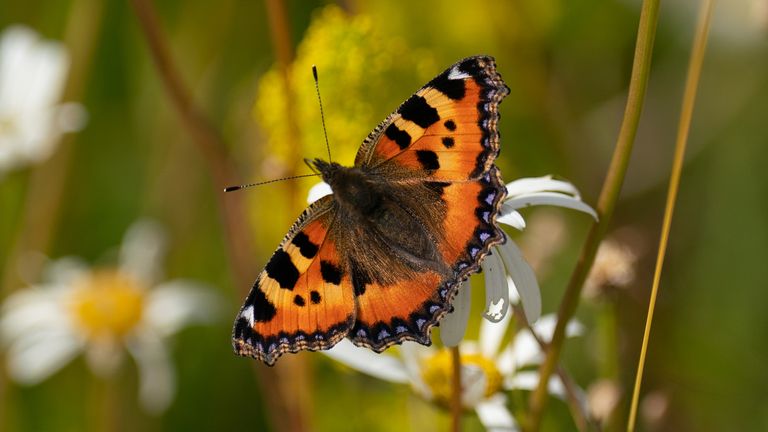
Numbers of the tortoiseshell have plummeted since 1976, data shows. Pic: PA
‘Significant’ declines in some species
Data revealed 31 species have shown a long-term decline.
Experts said this included 22 species showing significant declines, including widespread butterflies such as the small tortoiseshell, whose numbers have plummeted by…


