

[ad_1]
This week, many of the tech world’s glitterati gathered in Lisbon for Web Summit, a sprawling conference showcasing everything from dancing robots to the influencer economy.
In the pavilions – warehouse-sized rooms chock full of stages, booths and people networking – the phrase “agentic AI” was everywhere.
There were AI agents that hung around your neck in jewellery, software to build agents into your workflows and more than 20 panel discussions on the topic.
Agentic AI is essentially artificial intelligence that can do specific tasks by itself, like book your flights or order an Uber or help a customer.
It’s the industry’s current buzzword and has even crept into the real world, with the Daily Mail listing “agentic” as an ‘in’ word for Gen Z last week.

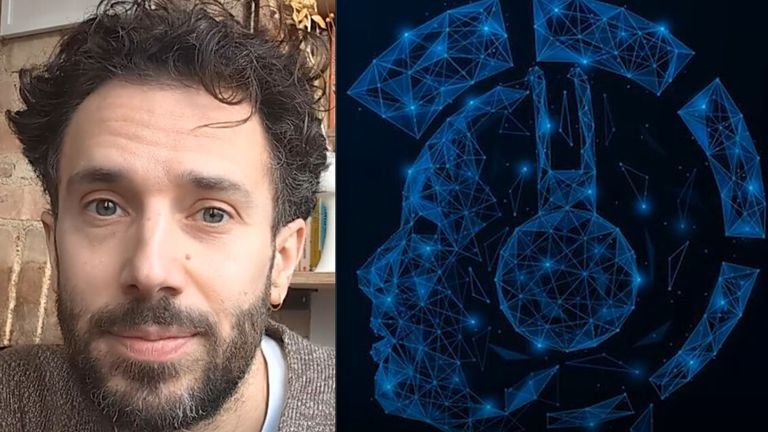
Babak Hodjat invented the natural language technology behind Siri
But AI agents aren’t new. In fact, Babak Hodjat, now chief AI officer at Cognizant, invented the technology behind one of the most famous AI agents, Siri, in the 1990s.

Desdemona, a humanoid AI robot musician, attended Web Summit
“Back then, the fact that Siri itself was multi-agentic was a detail that we didn’t even talk about – but it was,” he told Sky News from Lisbon.
“Historically, the first person that talked about something like an agent was Alan Turing.”
New or not, AI agents are thought to come with even more risks than general-purpose AI, because they interact with and modify real-world scenarios.
[ad_2]


