

[ad_1]
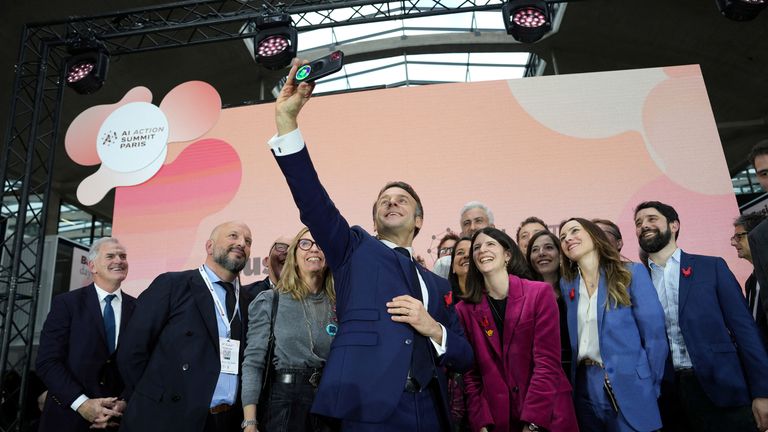
World leaders and tech bros descended on Paris this week, with some determined to show a united stance on artificial intelligence.
But at the end of the two-day summit, the UK and the US walked away empty-handed, having refused to sign a global declaration on AI.
Earlier on Tuesday, US vice president JD Vance told his audience in Paris that too much regulation could “kill a transformative industry just as it’s taking off” and Donald Trump has already signed an executive order removing rules imposed by Joe Biden.
But for the UK, the declaration did go far enough.
“The declaration didn’t provide enough practical clarity on global governance and [didn’t] sufficiently address harder questions around national security,” said a UK government spokesperson.
What is the Paris AI Action Summit?
So what is the UK government so concerned everyone is missing?
Aside from taking jobs and stealing data, there are other existential threats to worry about, according to Carsten Jung, the head of AI at the Institute for Public Policy Research (IPPR).
He listed the ways AI can be dangerous, from enabling hackers to break into computer systems to losing control of AI bots that “run wild” on the internet to even helping terrorists to create bioweapons.
“This isn’t science fiction,” he said.
[ad_2]


