

[ad_1]
Throughout the pandemic, the relatively low unemployment numbers were often reported behind a series of caveats.
“If it weren’t for the furlough scheme the numbers would be far worse”.
“Once the furlough scheme is over, there could well be a steep cliff edge”
And so on.
Dire forecasts about severe leaps in joblessness were no doubt behind a series of extensions to the government’s iconic scheme.
But the Coronavirus Job Retention Scheme did come to an end, after 17 months, on 30 September.
The payroll data for the month of October is one of the first insights into whether it achieved its stated aims; to save viable jobs and prevent mass unemployment.
In short, did it work?
Well, based on these numbers the answer appears to be yes.
The number of payrolled employees actually rose by 160,000 between September and October, that’s despite the fact there were some 1.1 million people still on furlough as the scheme drew to a close.
The Office for National Statistics (ONS) has warned that this alone may not capture all people let go at the end of furlough as many may still be working through their notice periods, for instance, and we will also need to wait a month for the official unemployment rate for October.
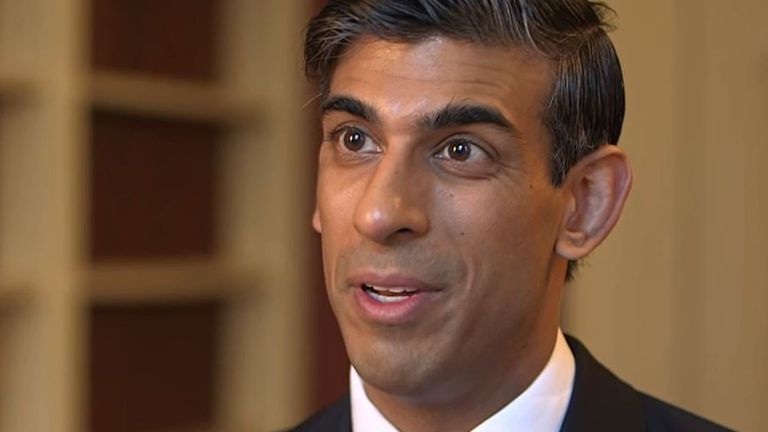
Sunak hails unemployment drop
But these numbers are still good news and were enough for the chancellor to proclaim the “extraordinary success” of his scheme.
The reality is that employers have already been contributing significantly to the wages of furloughed employees as the scheme began to taper off in August and September.
The feeling is that most would have only opted to do this if there was a…
[ad_2]
Source : skynews


