

Just over three weeks ago, then-chancellor Kwasi Kwarteng unveiled his tax-cutting mini-budget to MPs which caused economic turmoil in the UK.
Following a dramatic U-turn on a promise to abolish the 45% higher rate of income tax after backlash from the government’s own Conservative MPs earlier this month, Mr Kwarteng has now been sacked – and many of the other pledges in the mini-budget have been torn up.
On Friday, the government scrapped its decision to axe the rise in corporation tax to 25% next year.
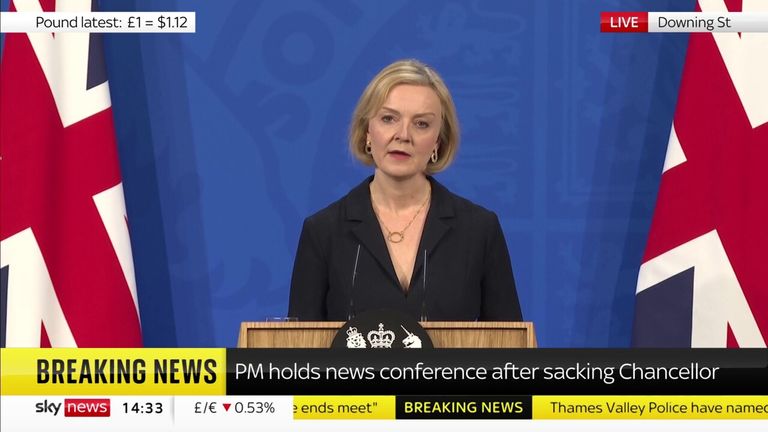
Addressing the nation in a statement on Monday morning, newly appointed chancellor Jeremy Hunt confirmed that most of the other mini-budget proposals have also now been thrown in the bin as Prime Minister Liz Truss seeks to hold on to her premiership.
Hunt goes further than expected – as Tory MPs say it’s ‘when not if’ Truss goes – follow latest on politics
Here is a breakdown of what was in the government’s mini-budget at the end of September and what has changed:
Income tax:
What was pledged?
• The government pledged that the 45% higher rate of income tax would be abolished.
• There was a promise to reduce the basic rate of income tax to 19p in the pound by April 2023, meaning 31 million people would be better off by an average of £170 a year.
What has changed?
• The government rowed back on its decision to scrap the highest rate of income tax earlier this month.
• Mr Hunt said the basic rate of income tax would now “indefinitely” stay at 20p until economic conditions allowed a reduction.
“It is a deeply held Conservative value – a value that I share – that people should keep more of the money that they earn,” the new chancellor said.
“But at a time when markets are rightly demanding commitments to sustainable public finances, it is not right to borrow to fund this tax cut.”
Corporation tax
Source : skynews


