

Scientists are turning detective to work out what British dolphins are up to beneath the waves – by using forensic-style DNA techniques on their poo.
Conservationists have been studying the 250 or so bottlenose dolphins living in Cardigan Bay, west Wales, over many decades.
Up to now, they have only been able to observe the dolphins as they surface to breathe or play, identifying the animals from the unique marks on their dorsal fins to establish which animals were hanging out together and where.
But now for the first time scientists are using DNA excreted by the dolphins in their poo to build a more complete picture of their lives.
It allows them to identify the sex of individuals and how they are related to other animals. Signficantly, it also shows what the dolphins have been eating.
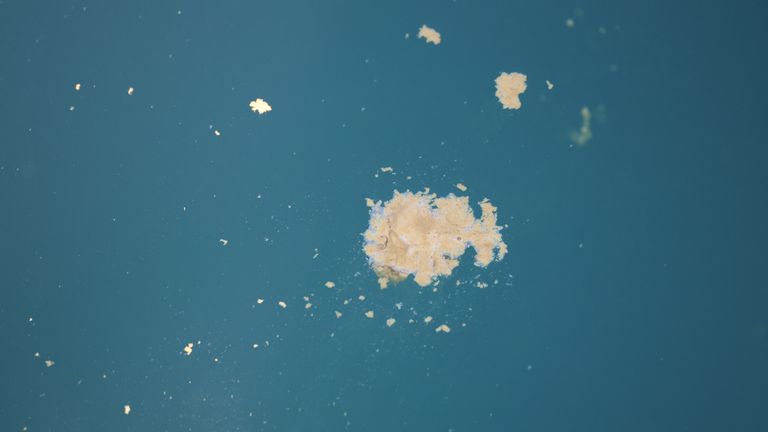
Dolphin poo. Pic: Sarah Perry/WTSWW
Dr Sarah Perry, marine conservation manager at The Wildlife Trust of South and West Wales, said: “In order to be able to conserve them, we need to know why they’re here and a big a missing part of that is, what they’re feeding on.
“Is that changing at different times of the year? Are certain species of fish more important to them early on in the year, in the spring, and the summer months, and then does that change over the autumn and winter months?
“Are certain species important for younger animals? We don’t know that, so that kind of information, we need to find out.”
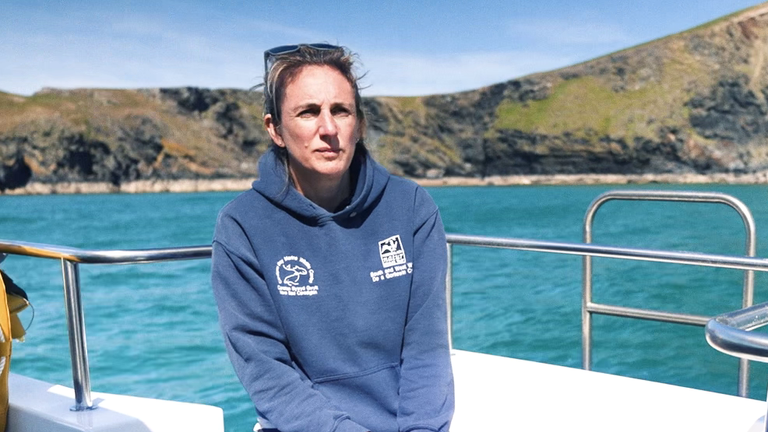
Dr Sarah Perry
Catching dolphin poo involves a large element of luck.
The animals occasionally eject a cloud of waste material as they swim.
But it quickly sinks, so the scientists’ boat needs to be close enough for them to scoop it out of the sea with a fine-meshed net.
A sample is then sent to…


