

Last week Boris Johnson met representatives of the nuclear industry at 10 Downing Street to see how the technology could contribute to his Energy Security Strategy.
After the PM’s opening remarks, there must have been smiles all round when he said he wanted to see a quarter of the UKs energy coming from nuclear power.
That’s the level it was at back in the heyday of nuclear power, and would require a massive replacement programme of ageing, or already decommissioned plants.
There are only six stations still operating now, making up about 16% of our electricity generating capacity. But by 2030 all but one of the existing plants are due for shut down, and there’s only one – Hinkley C in Somerset – scheduled to come online.
It’s a moment that even those in the nuclear industry thought may never come. The recent history of UK nuclear investment has not been pretty.
Two major nuclear developments in North Wales and Cumbria both collapsed during the last decade as investors pulled out following the Fukushima disaster.
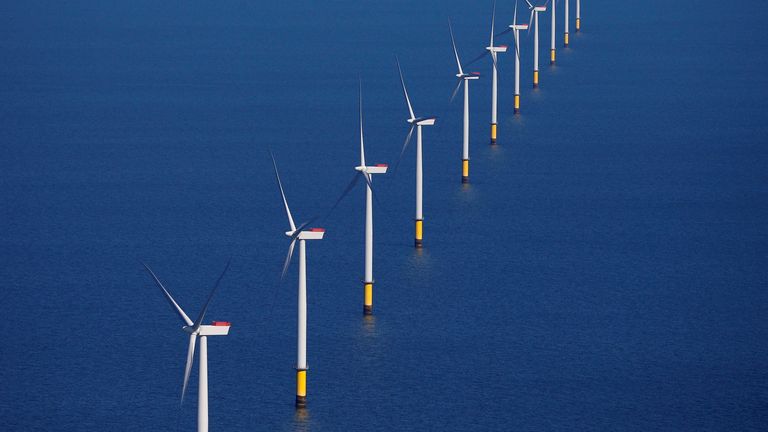
The Walney Extension offshore wind farm operated by Orsted off the coast of Blackpool
And while the Hinkley Point C plant in Somerset survived, it has run spectacularly over schedule and budget.
But three things have now changed the prospects of the nuclear industry.
The first is the Russian invasion of Ukraine, making energy security a new, and urgent priority for the UK.
The anticipated Energy Security Strategy is expected to feature a renewed commitment to fossil fuel free nuclear.
Then there are ambitious net-zero targets which many think aren’t achievable without nuclear power making at least some contribution.
Finally, according the industry at…
Source : skynews


