

UK manufacturers are grappling with the biggest monthly leap in their costs since 1992, according to the first snapshot of the Middle East conflict’s effect on the economy.
The flash reading for S&P Global’s Purchasing Managers’ Index (PMI), which covers both factory and non-retail service sector output, showed activity at its slowest pace for six months during March.
While still in positive territory, the survey of company purchasing managers will raise fears for growth and the outlook for inflation in the wake of US-Israeli war with Iran.
Money latest: Markets remain volatile despite peace hopes
Input costs were driven up by higher prices for fuel, transport and energy-intensive raw materials, according to the report.
As of Tuesday morning, Brent crude oil is almost 50% up since the hostilities started on 28 February, while gas prices have leaped by more than 90%.
There is no energy price cap to shield businesses from these market shifts.
S&P’s measure of those costs for factories showed the biggest acceleration from one month to the next since sterling tumbled out of Europe’s Exchange Rate Mechanism in 1992.
Businesses said they raised their prices at the fastest rate since April 2025 – a move that will be reflected in an increasing amount of goods in the coming days and weeks – while employment fell for the 18th month in a row.
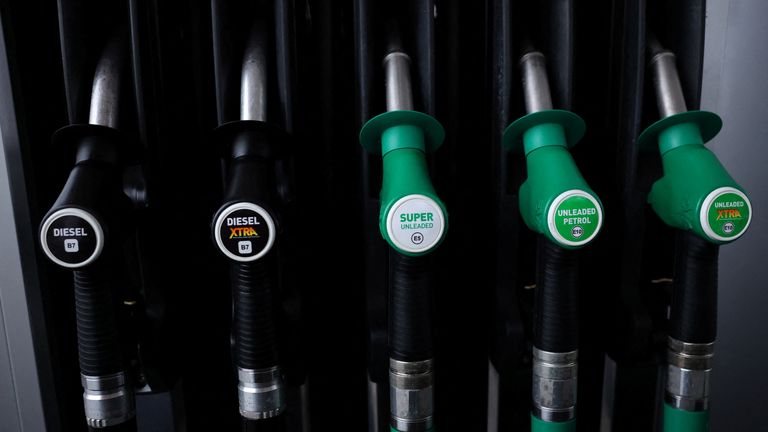
Energy costs, including those for fuel, are already being passed on by companies. File pic: Reuters
The effects of the Middle East conflict represent challenges for the Bank of England as it will want to prevent an energy-led spike…


