

[ad_1]
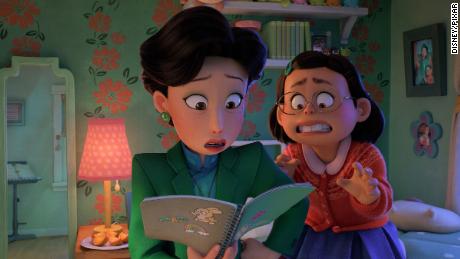
Mei’s mother Ming assumes this reluctance to leave the bathroom means her 13-year-old daughter has just gotten her first period.
“Did the … did the red peony bloom?” her mom asks through the door.
Ming soon storms in with ibuprofen, vitamins, a hot water bottle and pads. Mei, unable to tell her mother what’s really going on, endures an uncomfortable conversation about how she’s now a woman and how her body is starting to change.
Mei is indeed undergoing a bodily transformation — just not the one her mom thinks. As Mei soon discovers, she poofs into a furry red panda when she’s overcome with emotion, reverting back only when she gets her emotions under control. Menstruation may not be what’s ailing Mei, but the metaphor for periods, puberty and the ensuing emotional roller coaster is clear.
By normalizing — and even celebrating — one of life’s most awkward phases, “Turning Red” does something not often seen on film and television, especially media aimed at kids. It treats periods and female puberty as something to be embraced, rather than be embarrassed about.
‘Turning Red’ normalizes periods
[ad_2]
Source : cnn


