

‘Tropical nights’ might sound like a beach-side party, or a refreshing cocktail, but the reality is less entertaining.
In fact, tropical nights – when temperatures don’t dip below 20C – have become an increasingly common, sweaty fixture in Europe since the 1980s, and it’s disrupting both lives and holidays in unexpected ways.
Last year, southern European summer destinations – including the sun-drenched shores of southern Italy, Croatia, Turkey and Greece – sweltered through a record-breaking 23 tropical nights, according to new data.
That’s nearly three times the average of just eight, and far above the previous record of 16 in 2012, the EU’s Copernicus Climate Change Service said.
Tropical nights mean a sleepless, sticky time in bed, when sweaty sheets cling to skin and opening windows brings no respite.
Dann Mitchell from the UK’s Met Office said nighttime temperatures are “really important for our health” because it’s the part of each day when we recover. And if it can’t do that, it brings a “whole host of issues”, he warned.
These sweltering figures came in what was the hottest year ever in Europe. But they aren’t a one-off. Climate change is making the atmosphere warmer, bringing ‘heat stress’ in the day as well as at night.
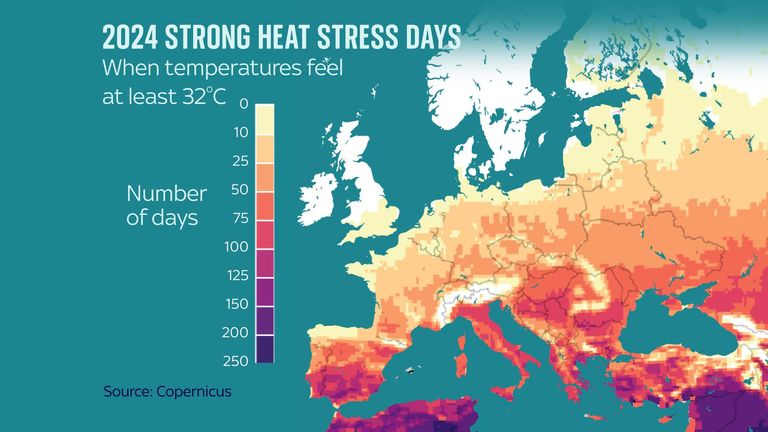
Last year there were also 66 days of ‘strong heat stress’ across southern Europe – when daily temperatures reach a ‘feels-like’ temperature of 32°C or higher – far surpassing the average of 29 days.
The price of sleepless nights
Soaring daytime highs paired with sultry nights are pushing the limits of human comfort – and health.
Madeleine Thomson, Head of Climate Impacts & Adaptation at health research foundation Wellcome, said: “Europe is heating up, and we’re not prepared for the toll this will take on our health.”
“Deaths from heat stress are the most visible impact. But extreme heat doesn’t just kill – it also increases the risk of heart disease,…


