

[ad_1]
You can’t have Christmas without cardboard, or Boxing Day without a box for that matter.
Corrugated board and the paper from which it’s made – fibre as it’s known in the industry – is a fundamental raw material during the festive season.
Many parents will be familiar with a child enjoying the box more than the present that came in it.
But fibre is critical to the global economy all-year round.
Almost everything in your fridge, your front room, your medicine cabinet, as well as under the tree, will have been packed in, or with, corrugated board and paper.
And as with many crucial commodities, the pandemic has changed the market.
Demand has soared as lockdowns drove people indoors, entrenched working from home and accelerated the e-commerce and home delivery boom.
There were 5 billion parcel shipments in the UK in 2020, a 33% increase according to the Pitney Bowes Parcel Shipping Index. That’s 74 boxes per person.
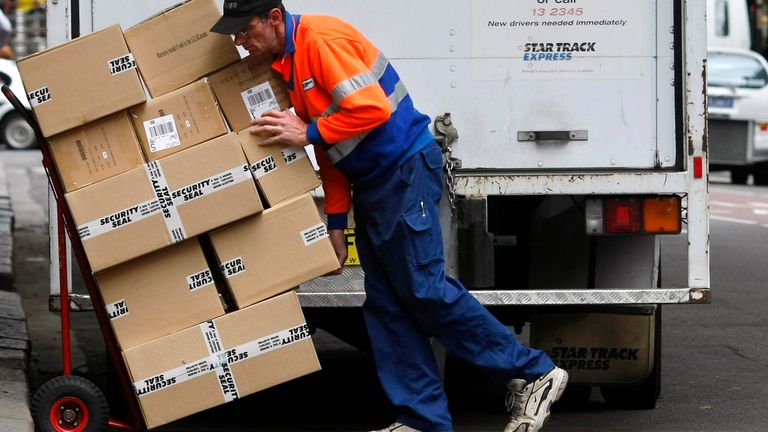
E-commerce has seen a significant rise during the COVID-19 pandemic
But production of those parcels depends on recycling, and while consumption has soared here and around the world, the rate of recovery fell.
Government statistics for 2020 released this week show that while total waste from UK households increased by 1.8% to 22.6m tonnes or 399kg per person, recycling rates fell 1.2% to just under 10m tonnes.
A shade under 6 million tonnes of “dry material”, which includes paper and card, was recycled, down very slightly despite the increase in consumption.
For manufacturers, the decline in recycling rates has combined with increased demand to drive up prices.
“We’ve seen a huge increase in demand from our big customers for our product, and because it’s so sustainable, we can reuse it again and again and again,” said Miles Roberts, chief…
[ad_2]
Source : skynews


