

The anti-satellite test was condemned by US officials — and much of the scientific community — as a “reckless and dangerous act” that could pose a threat to space activities for years to come.
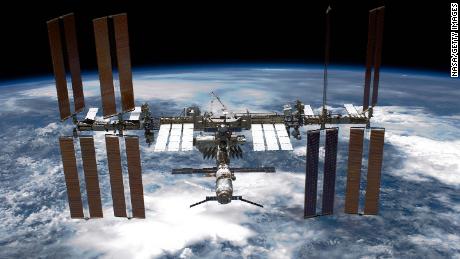
The missile test created more than 1,500 pieces of trackable debris, according to US Space Command. The fragments are a hazard to the current seven-person crew on the International Space Station — which includes two Russians — and to other satellites that provide crucial communication services back on Earth.
More than six decades after the Soviets launched the first satellite, Sputnik 1, the junkyard in our skies is growing. Experts warn that much like the climate crisis facing Earth, space is also feeling the impact of human activity.
“You can look at the build-up of plastic in Earth’s oceans, and the build-up of junk in orbit around the Earth as being very similar,” said Hugh Lewis, professor of engineering and physical sciences at the UK’s University of Southampton.
“The Earth environment and the space environment — is just one environment,” he said, adding that while some governments are working on improving space sustainability, there is still a lot of diplomatic work required.
Space junk was not on the negotiating table at the COP26 climate summit.
Junkyard in the sky
Invisible in the night sky, there are hundreds of millions of debris objects orbiting our planet. This debris is composed of parts of old satellites as well as entire defunct satellites and rocket bodies.
Source : cnn


