

A law to force social landlords to investigate and fix hazards within a set timescale will be phased in from October, the government has announced.
The legislation is named after two-year-old Awaab Ishak, who died in December 2020 from a respiratory condition caused by prolonged exposure to mould in the social home his family rented in Rochdale, Greater Manchester.
Politics latest: No 10 defends new US ambassador
The tragedy sparked widespread calls for change after an inquest heard how action to treat and prevent the mould was not taken – despite the boy’s father repeatedly raising the issue with Rochdale Boroughwide Housing (RBH).
In response, the then Conservative government pledged to introduce Awaab’s Law to hold social landlords to account, with Labour vowing to implement and extend it to the private sector if they won the general election, which they did last July.
Setting out the next steps, Deputy Prime Minister and Housing Secretary Angela Rayner said it will come into force in the social rented sector from October this year.
It means social landlords will be required to address damp and mould hazards that present a significant risk of harm to tenants within fixed timescales.
The timescales were not set out in Ms Rayner’s statement.
A consultation under the Tories had proposed forcing landlords to investigate the problems within 14 days, and fix them within a further seven, but it is not clear if this will still be the case – with more details expected later down the line.
Ms Rayner said that from October 2025, social landlords will also have to address all emergency repairs, whether they relate to damp and mould or any other hazard, as soon as possible and within no longer than 24 hours.
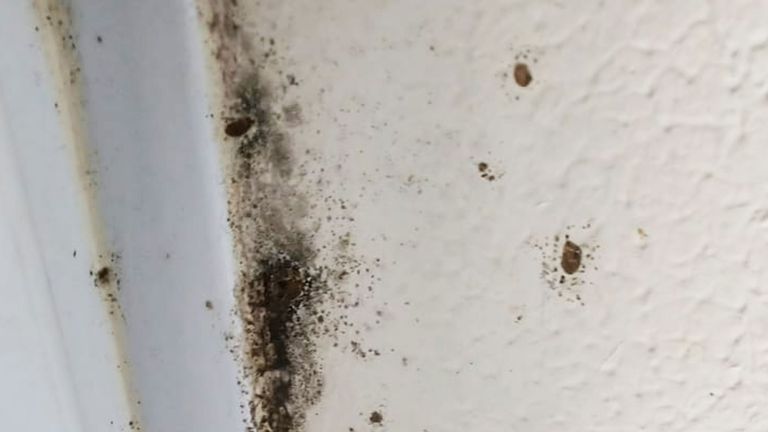
Mould in Awaab’s social home
What happens after 2025?
From 2026, the…


