

[ad_1]
Scientists trying to bring back the woolly mammoth have created a woolly mouse.
Colossal Biosciences unveiled plans in 2021 to revive the woolly mammoth – and later the dodo bird – attracting investors, headlines and critics alike.
The Texas-based biotech company has since focused on identifying the key traits of extinct animals with the goal of genetically engineering them into living animals, according to chief executive Ben Lamm.
Read more: Why ‘de-extincting’ the mammoth won’t be like Jurassic Park
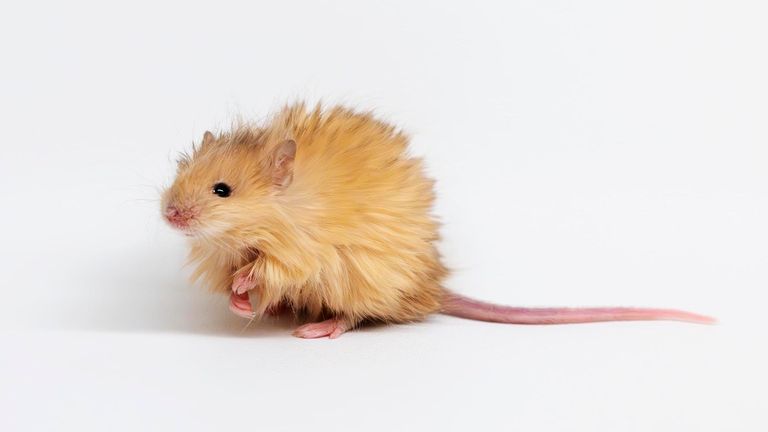
Pic: Colossal Biosciences/AP
Alongside bringing back species that went extinct, the company hopes their work can be used to help with conservation efforts.
But other scientists have mixed views of their work and whether it will be helpful.
On Tuesday, Colossal Biosciences said its researchers had edited seven genes in mice embryos to create a mouse with long, thick, woolly hair.
They nicknamed the extra-furry rodent a “colossal woolly mouse.”
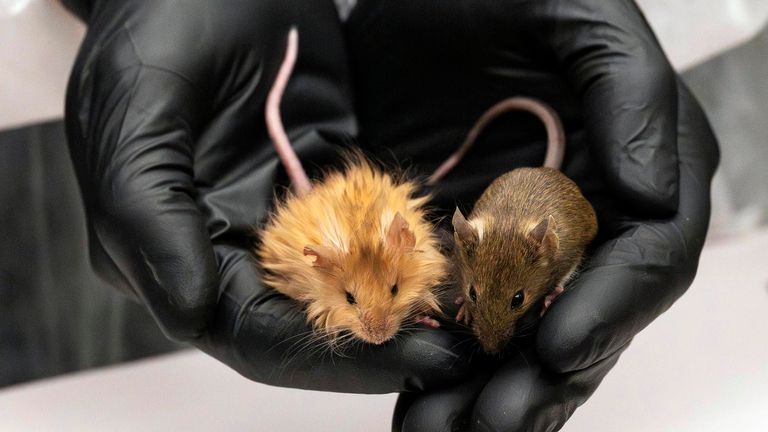
A genetically edited mouse with long, thick, woolly hair at a lab in Dallas, Texas.
Pic: Colossal Biosciences/AP
The company now plans to genetically modify Asian elephants to give them woolly mammoth traits – but critics have argued that this is different from actually bringing a species back from extinction.
“You’re not actually resurrecting anything – you’re not bringing back the ancient past,” said Christopher Preston, a wildlife and environment expert at the University of Montana, who was not involved in the research.
He added: “You might be able to alter the hair pattern of an Asian elephant or adapt it to the cold, but it’s not bringing back a woolly mammoth. It’s changing an Asian elephant.”
The results have not yet been published in a journal or…
[ad_2]


