

[ad_1]
While some revel in the scent of a real tree and the joy of picking one out at a local farm, others prefer the simplicity of artificial trees they can reuse for Christmases to come.
But consumers are becoming more climate-conscious, and considering which tree has the lowest impact on our rapidly warming planet has become a vital part of the holiday decision. Plus, choosing a planet-friendly tree will likely get you on Santa’s good list.
So, which kind of tree has the lowest carbon footprint — a natural tree or a store-bought plastic tree? It’s complicated, experts say.
“It’s definitely a lot more nuanced and complex than you think,” Andy Finton, the landscape conservation director and forest ecologist for the Nature Conservancy in Massachusetts, told CNN.
We’ve made a list — and checked it twice — of the things to know before you choose between real and artificial.
The case for artificial trees
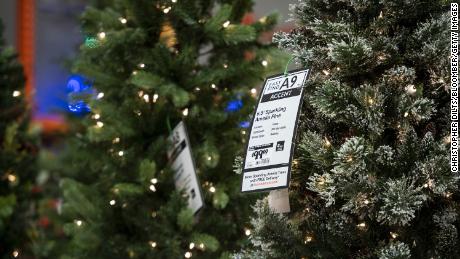
It’s easy to imagine that reusing an artificial tree year after year is the more sustainable option. But Finton says if an artificial tree is used for fewer than six years, the carbon cost is greater than investing in a natural tree.
“If the artificial trees are used for a longer lifespan, that balance changes,” Finton told CNN. “And I’ve read that it would take 20 years for the carbon balance to be about equivalent.”
Then there’s the transportation aspect. According to the US Department of Commerce, most artificial Christmas trees are imported into the US from China, meaning the products are carried by fossil fuel-powered ships across the Pacific Ocean, then moved by heavy freight trucks before it ultimately lands on the distributor’s shelves or the consumer’s doorstep.
[ad_2]
Source : cnn


