

NEWYou can now listen to Fox News articles!
Amid significant budget cuts, NASA is fast-tracking the development of nuclear reactors on the moon and next-generation space stations with one clear objective: beating U.S. adversaries in the new space race.
Two new memos signed by interim NASA chief and Transportation Secretary Sean Duffy outline a bold strategy to secure strategic ground on the moon. The centerpiece of this effort is a lunar nuclear reactor, a renewable and stable power source to support long-term exploration.
“The goal is to power everything,” a senior NASA official told Fox News Digital. “Our systems, habitats, rovers, robotic equipment, even future mining operations — everything we want to do on the moon depends on this.”
The moon’s environment makes this a necessity. Its month-long day cycle — two weeks of daylight followed by two weeks of darknessc — renders solar power unreliable. A reactor would allow missions to function around the clock.
TRANSPORTATION SECRETARY DUFFY TO ANNOUNCE NUCLEAR REACTOR DEVELOPMENT PLAN FOR THE MOON
NASA is soliciting proposals from private firms for new commercial space stations and a lunar nuclear reactor. (SpaceX)
China and Russia set sights on the moon
NASA officials warn that China and Russia have publicly announced plans for a joint lunar nuclear project by the mid-2030s. If they succeed first, they could establish exclusive control over the moon’s most valuable areas, locations with the most light and access to water and ice.
“They could set up a ‘keep-out zone’ in the prime locations,” the NASA official cautioned.
Despite financial constraints, Duffy’s leadership signals a renewed priority to lunar and Martian exploration.
“China has already landed on the far side of the moon. We never have,” the official added. “They’re moving on a steady path to dominate this domain.”
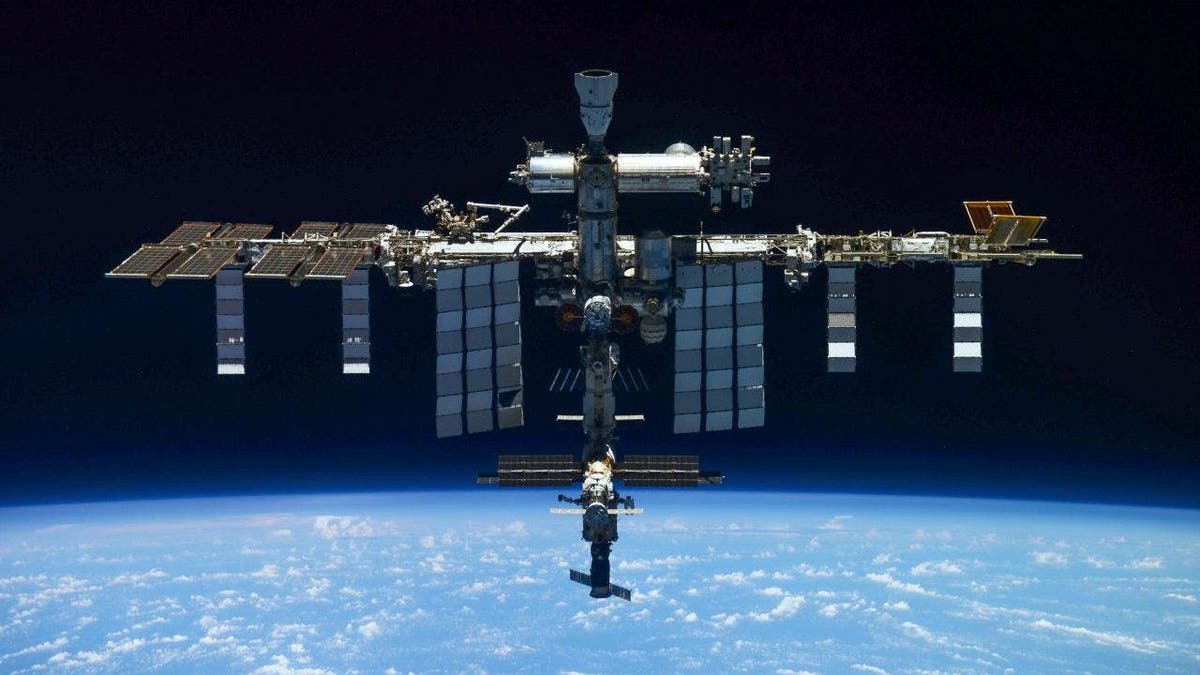
The International Space Station will exit orbit in 2030. (Roscosmos State Space Corporation via AP, File)


