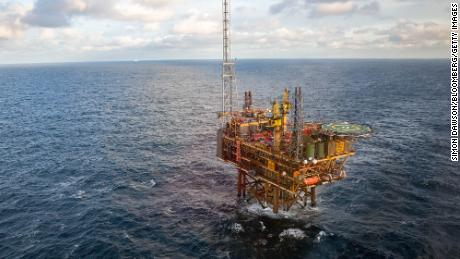
There’s a growing movement in Aberdeen for the region to lead the transition from Big Oil to Big Energy, using its deep-sea expertise to construct floating wind farms alongside offshore rigs.
“I think 2015 was the wake-up call that Aberdeen actually needed to say, ‘This ain’t going to be around forever,'” said Russell Borthwick, the local chamber of commerce’s chief executive. “When the oil price comes back, you [can] go back to just cigar smoking, wine drinking — ‘life’s great in Aberdeen isn’t it’ — but one day you’re going to wake up and there’s going to be nothing left.”
But it’s not yet evident whether the North Sea can successfully pivot away from its oil roots and serve up a model for the rest of the world. Companies in the region are determined to keep drilling. They say that money from oil and gas is essential to fund new renewable investments, and emphasize that the United Kingdom still needs fossil fuels to heat homes and keep the lights on for years to come, pointing to anxiety around an energy crunch that’s gripping Europe.
“[Renewable] investments are going to have to come from companies like ourselves, but we need to be able to have the balance sheet and the cash flow generation [from oil and gas] to be able to do that,” said Wael Sawan, Shell’s head of gas and renewables and a member of the company’s executive committee.
Shell, together with Blackstone-backed Siccar Point, is still waiting for the government’s permission to launch a new North Sea oilfield project known as Cambo, which is expected to produce oil until 2050.
There’s skepticism that the United Kingdom can have it both ways, however. The oil and gas sector maintains the government can approve new ventures and still meet its 2050 climate targets. Yet the International Energy Agency has said that fresh oil and gas development must stop if the world is going to limit warming to 1.5 degrees Celsius and avoid the worst effects of the climate crisis.
Keeping that option open is the primary…
Source : cnn