

[ad_1]
Nigel Farage pulled out all the stops to dazzle the audience when he unveiled his cabinet-in-waiting: podiums, lights, music and a sense of showbiz his rivals would struggle to muster.
But there remains one problem he cannot entirely shake: the faces behind those podiums are politicians who stood for the Conservative Party when it was roundly rejected by the electorate more than 18 months ago.
Politics latest: Lammy pays tribute to late civil rights campaigner
Tory defectors Robert Jenrick and Suella Braverman, both members of previous Conservative governments, will take up the role of chancellor and education secretary respectively if Reform wins the next general election.
There were awkward moments when Zia Yusuf, Reform’s head of policy who is the party’s pick for home secretary, trashed the Conservatives’ record on immigration – all while being flanked by ex-Tory immigration minister Jenrick.
Even Jenrick himself spoke of the country suffering “decades of mismanagement” – to which it felt there was a collective eyebrow-raise, accompanied with the question: “Whose fault is that?”
This is certainly what opposition parties are arguing – that despite the glitz and glamour, and the impression of the future, Reform is a party of the past.
Past faces, past dramas.
How was Farage‘s top team going to work together when the coveted position of chancellor was handed not to Farage’s loyal deputy, Richard Tice, but to newcomer Jenrick?
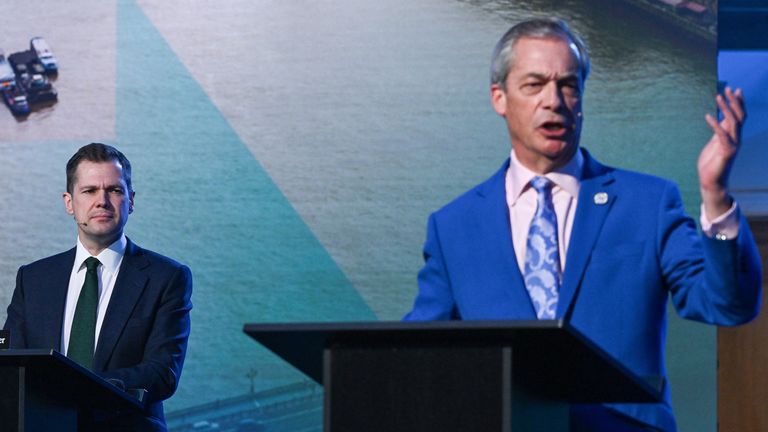
(L-R) Robert Jenrick and Nigel Farage. Pic: Reuters
And what about MPs who were elected by Reform voters – Lee Anderson and Sarah Pochin, for instance – who find themselves so far without a top job?
And if Yusuf was content to expose the Conservatives’ record on…
[ad_2]


