

It’s been three decades of COP talks – and as most of the climate metrics get worse, questions about whether the summits are working have become impossible to ignore.
This year, approximately 40,000 people are flying in to Belém in Brazil for COP30 – back in the country that hosted the landmark Rio Earth Summit in 1992.
At the time, it was the biggest gathering of world leaders ever.
It spawned a slew of treaties and documents that committed countries to growing economies in ways that also protected the environment: a blueprint for a brighter, greener future – or so they thought.
That included the world’s first-ever global climate treaty, the UNFCCC, which underpins the COP process and promised to “protect the climate system for present and future generations”.
“There was, I think, a general atmosphere of hope that this was the start of a process which could make a real difference,” said Michael Howard, Britain’s then environment secretary who attended Rio 1992, and later Conservative party leader.
But despite 29 rounds of COP negotiations, the natural world that Rio pledged to protect is gasping for air.
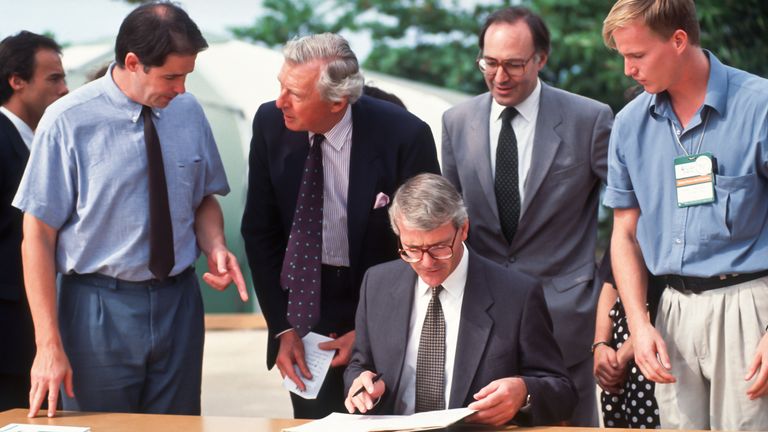
Michael Howard, second from right, standing behind then prime minister John Major, seated, writing his pledged at the Earth Summit in 1992. Pic: Alamy
Same stage, hotter planet
Annual greenhouse gas emissions are now a staggering 65% higher than they were in 1990.
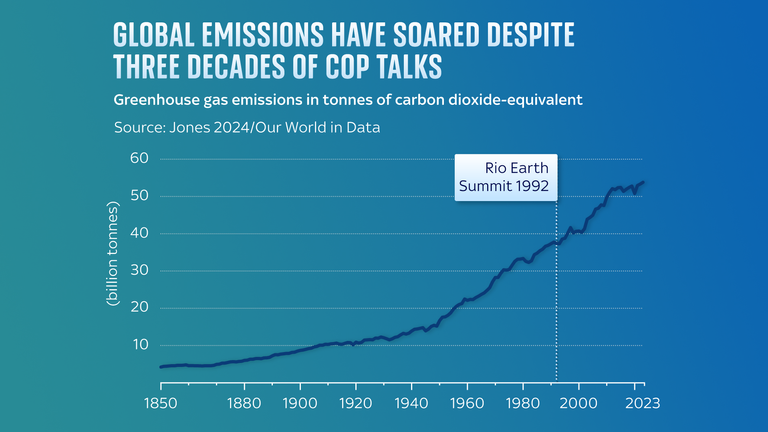
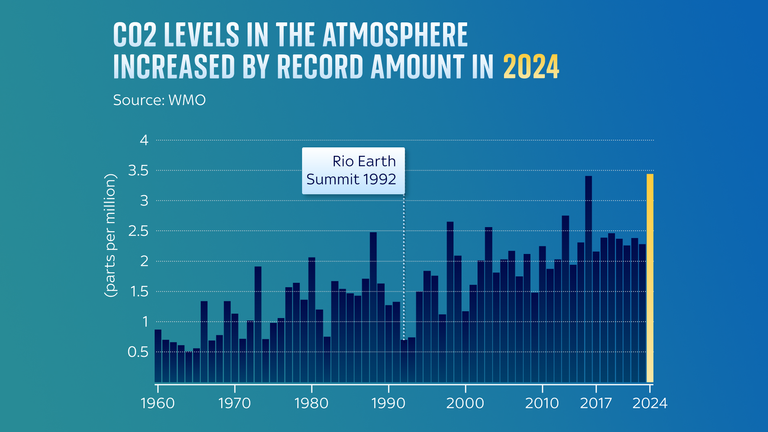
And the concentration of carbon dioxide in the atmosphere increased at the highest rate on record last year.
In France in 2015, some 20 COPs after the Rio Earth Summit, leaders struck the Paris Agreement – a landmark pact to limit warming ideally to 1.5C above levels in…


