

[ad_1]
Transport accounts for around a quarter of the world’s carbon emissions. The bulk of that comes from road vehicles and heavy machines.
Finding an alternative to internal combustion engines burning petrol and diesel is a priority if global temperature rises are to be kept below the UN target of 1.5C.
Electric batteries are widely seen as the answer to the transport pollution problem. But if the electricity they are charged with upstream is produced by burning fossil fuels, their contribution to solving the climate emergency is nullified.
What if there was an alternative fuel that didn’t lead to greenhouse gas emissions? Industrialists and entrepreneurs are increasingly interested in the possibilities offered to transport by hydrogen.
I recently tried out two types of vehicles that are powered by hydrogen in different ways – a JCB digger and a two-seater car.
Lord Bamford, the CEO of JCB, believes the use of “hydrogen, more so than electric battery power, holds the key to bringing our global climate crisis under control.”
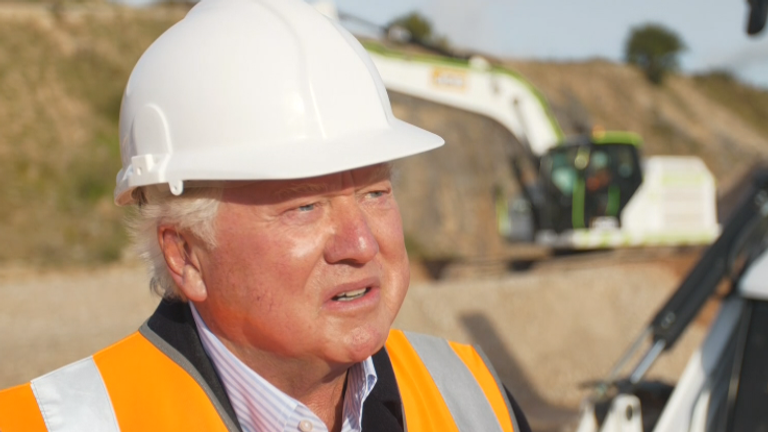
Lord Bamford
In less than two years JCB engineers developed working prototypes from scratch. I drove a hydrogen-powered “backhoe digger” around JCBs test site at a quarry in Derbyshire and even picked up some rocks in its bucket.
I’m no expert driver but it all worked smoothly.
Remarkably the machine is powered by an internal combustion engine similar to a petrol or diesel engine but burning hydrogen with water as the only emission.
The firm also produces machines powered by electric batteries and fuel cells, which combine hydrogen and oxygen to produce electricity to drive motors.
But for heavy-duty work they believe hydrogen internal combustion (IC) is the most promising alternative to conventional…
[ad_2]
Source : skynews
