

Analysts say they started noticing the drop-off in shipping traffic toward the end of October, as China prepared to enact legislation governing data privacy.
Usually, shipping data companies are able to track ships worldwide because they are fitted with an Automatic Identification System, or AIS, transceiver.
This system allows ships to send information — such as position, speed, course and name — to stations that are based along coastlines using high-frequency radio. If a ship is out of range of those stations, the information can be exchanged via satellite.
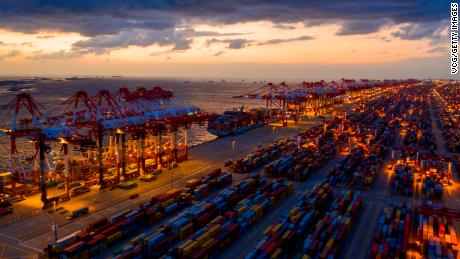
But that’s not happening in the world’s second-largest economy, a critical player in global trade. In the past three weeks, the number of vessels sending signals from the country has plunged by nearly 90%, according to data from the global shipping data provider VesselsValue.
“We are currently seeing an industry wide reduction in terrestrial AIS signals in China,” said Charlotte Cook, head trade analyst at VesselsValue.
New data law could worsen supply chain chaos
Asked about the issue, China’s Ministry of Foreign Affairs declined to comment. The State Council Information Office, which acts as a press office for the country’s cabinet, did not immediately respond to a request for comment about why shipping providers were losing access to data.
The law doesn’t mention shipping data. But Chinese data providers might be withholding information as a precaution, according to Anastassis Touros, AIS network team leader at Marine Traffic, a major ship-tracking information provider.
“Whenever you have a new law, we have a time period where…
Source : cnn


