

[ad_1]
Sealed off from its host city by a labyrinth of high fences, thermal gates and facial-recognition cameras, this is an Olympics like no other.
Politics, protests and Covid protocols have become an unavoidable part of the build-up to these Games, and if anything, events taking place outside the sporting arena during the next two weeks will receive as much attention as actions on the ice and snow.
How China responds will be a major test for the country’s leader Xi Jinping, who is gearing up for an unprecedented third term in power this fall.
“The world is turning its eyes to China, and China is ready,” Xi said Thursday ahead of the opening ceremony.
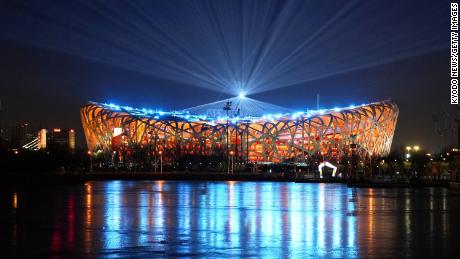
For China’s ruling Communist Party, the Games will offer a moment of national triumph, as Beijing becomes the first city to host both the Summer and Winter Olympics. It is also the first major global event inside of China since the country shut its borders two years ago in the wake of the initial coronavirus outbreak.
But among the Chinese public, enthusiasm for the Winter Games pales in comparison with 2008, when residents gathered in their thousands across Beijing to watch the Summer Olympics opening ceremony on large public screens, eager to be a part of history. This year, few viewing parties are taking place in a capital subdued by heavy-handed snap lockdowns and other pandemic restrictions.
“I think the Games are going to be declared a great success by the Communist Party — whether it’s gonna be perceived as such by other nations is another issue,” said Jean-Pierre Cabestan, a professor of political science at Hong Kong Baptist University.
Defending the bubble
In a bid to keep the Games Covid-free — and to prevent the virus from spreading into the wider population — Chinese authorities have constructed a vast network of bubbles, known officially as the “closed loop,” that separates the Games from the host city.
[ad_2]
Source : cnn


