

In theory, being chairman of the US Federal Reserve is one of the most powerful positions in the global economy.
In practice, the incumbent, Jerome Powell, has probably not felt that during his term in office.
Having been appointed by Donald Trump four years ago, Mr Powell had to endure constant sniping from the former president for his stewardship of the US economy.
Almost immediately, Mr Trump carped frequently at Mr Powell for raising interest rates, undermining his independence in a way that had not been seen for nearly half a century.
Mr Trump even claimed at one point he was more worried about the Fed than he was about China.
Now Mr Powell, whose four-year term is due to end in February next year, again finds himself being talked about for all the wrong reasons.
Joe Biden, Mr Trump’s successor, indicated this week that he is close to making a decision on whether to reappoint Mr Powell – with the Washington rumour-mill speculating that he may instead choose Lael Brainard, a current Fed governor.
Such a move would immediately have an impact on the financial markets because Ms Brainard is seen as more dovish than Mr Powell.
Markets currently expect the Fed to begin raising interest rates in the second half of next year once it has wound down its asset purchases – Quantitative Easing in the jargon.
Ms Brainard’s appointment would see markets repricing the timing of rate hikes.
The US dollar might be expected to fall under those circumstances while, with the prospect of interest rates staying lower for longer, there is every chance of a sell-off in US Treasuries (US government IOUs) if investors think it will raise expectations of higher inflation.
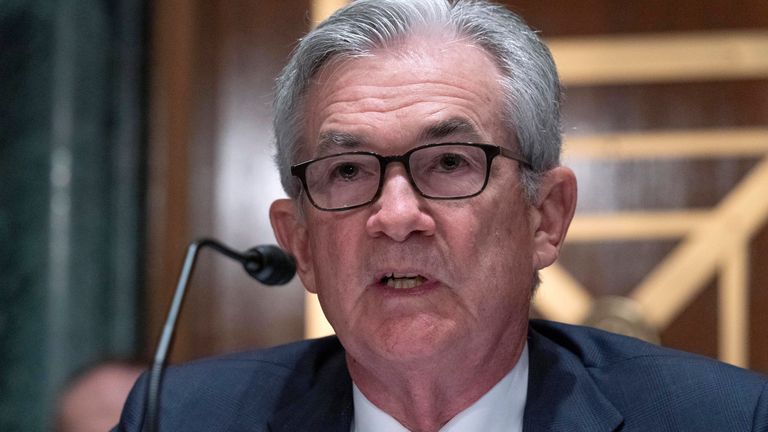
Jay Powell. Pic: AP
The decision, however, is very finely balanced…
Source : skynews


