

[ad_1]
That changed on Monday as Sydney, Australia’s largest city and the capital of New South Wales, emerges from a strict lockdown imposed in June to contain a Delta outbreak.
McTighe said she’s “excited” to start her life again and see her loved ones, but she’s worried about what having Covid-19 in the community might mean for the city of 5.3 million people.
“I think until everyone has a better understanding of this thing and how it keeps changing, we have to be concerned,” she said.
For more than 18 months, Australia has shut itself off from the world, closing borders and imposing strict lockdowns to stamp out Covid-19 outbreaks in an attempt to eliminate the virus.
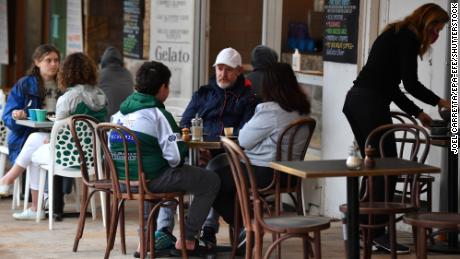
From Monday, fully vaccinated Sydneysiders, who make up more than 70% of the city’s adults, can return to restaurants, bars and gyms — and many like McTighe are now able to reunite with loved ones in aged care after months apart.
But all that hard-earned freedom will come at a cost — national modeling suggests Sydney will see thousands of new infections and inevitable deaths.
Questions remain about how the hospital system will cope with any surge of new cases, the impact on vulnerable people and how quickly Sydney can adapt to living with Covid.
What happens next will be critical for both the city and Australia. But other zero-Covid countries in the Asia-Pacific region will also be watching closely to see if Sydney can succeed in keeping case numbers and deaths low enough to avoid overwhelming hospitals, while still allowing business to resume and people to get on with their lives.
The end of zero Covid
For the first year of the pandemic, Australia was one of the few major nations to successfully control Covid-19, through strict border restrictions, mandatory quarantine and temporary lockdowns.
But in June a Delta outbreak in Sydney quickly spread to the neighboring state of Victoria and the Australian Capital Territory (ACT)….
[ad_2]
Source : cnn


