

[ad_1]
A new analysis of sediment samples collected by the rover revealed the presence of carbon — and the possible existence of ancient life on the red planet is just one potential explanation for why it may be there.
That’s why carbon atoms — with their cycle of recycling — are tracers of biological activity on Earth. So they could be used to help researchers determine if life existed on ancient Mars.
When these atoms are measured inside another substance, like Martian sediment, they can shed light on a planet’s carbon cycle, no matter when it occurred.
Learning more about the origin of this newly detected Martian carbon could also reveal the process of carbon cycling on Mars.
Secrets in the sediment
Curiosity landed in Gale Crater on Mars in August 2012. The 96-mile (154.5-kilometer) crater, named for Australian astronomer Walter F. Gale, was probably formed by a meteor impact between 3.5 billion and 3.8 billion years ago. The large cavity likely once held a lake, and now it includes a mountain called Mount Sharp. The crater also includes layers of exposed ancient rock.
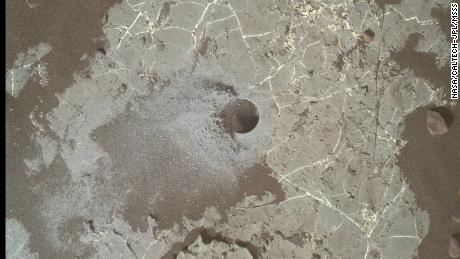
For a closer look, the rover drilled to collect samples of sediment across the crater between August 2012 and July 2021. Curiosity then heated these 24 powder samples to around 1,562 degrees Fahrenheit (850 degrees Celsius) in order to separate elements. This caused the samples to release methane, which was then analyzed by another instrument in the rover’s arsenal…
[ad_2]
Source : cnn


