

In one respect this decision is not altogether surprising.
The way the Supreme Court hearings were going, this seemed the most likely decision from the US judiciary.
Even so, it’s an enormous blow to the Trump regime.
The best place to begin understanding this is to go all the way back in history to the US constitution.
At the heart of it was the notion that the president should not have the unilateral power to set taxes which, back then at least, mostly consisted of tariffs.
Tariffs, in other words, needed to be decided by Congress. This wasn’t just incidental; it was the cornerstone of the much-celebrated “separation of powers”.
Trump latest: Tariffs snubbed by Supreme Court
The downside of this pretty clear constitutional stricture is that getting anything through Congress is often time consuming and cumbersome.
So, over the decades, various exceptions were written into law to allow presidents to, say, impose emergency tariffs in the event of national security or balance of payments crises – or because of a specific issue with a particular sector.
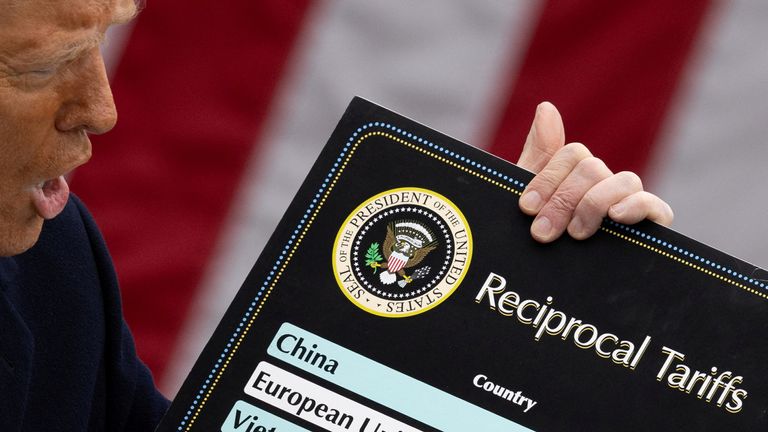
Trump announcing tariffs last April. Pic: Reuters
These exceptions represent a catalogue of obscure legal loopholes where the president can actually impose tariffs unilaterally without having to go through Congress.
Understanding this history is quite important to understanding what has just happened. Because much of the small print of how Donald Trump has imposed tariffs thus far has come back to the president’s use of these various historic loopholes.
So, for instance, the Trade Expansion Act of 1962 has a clause,…


